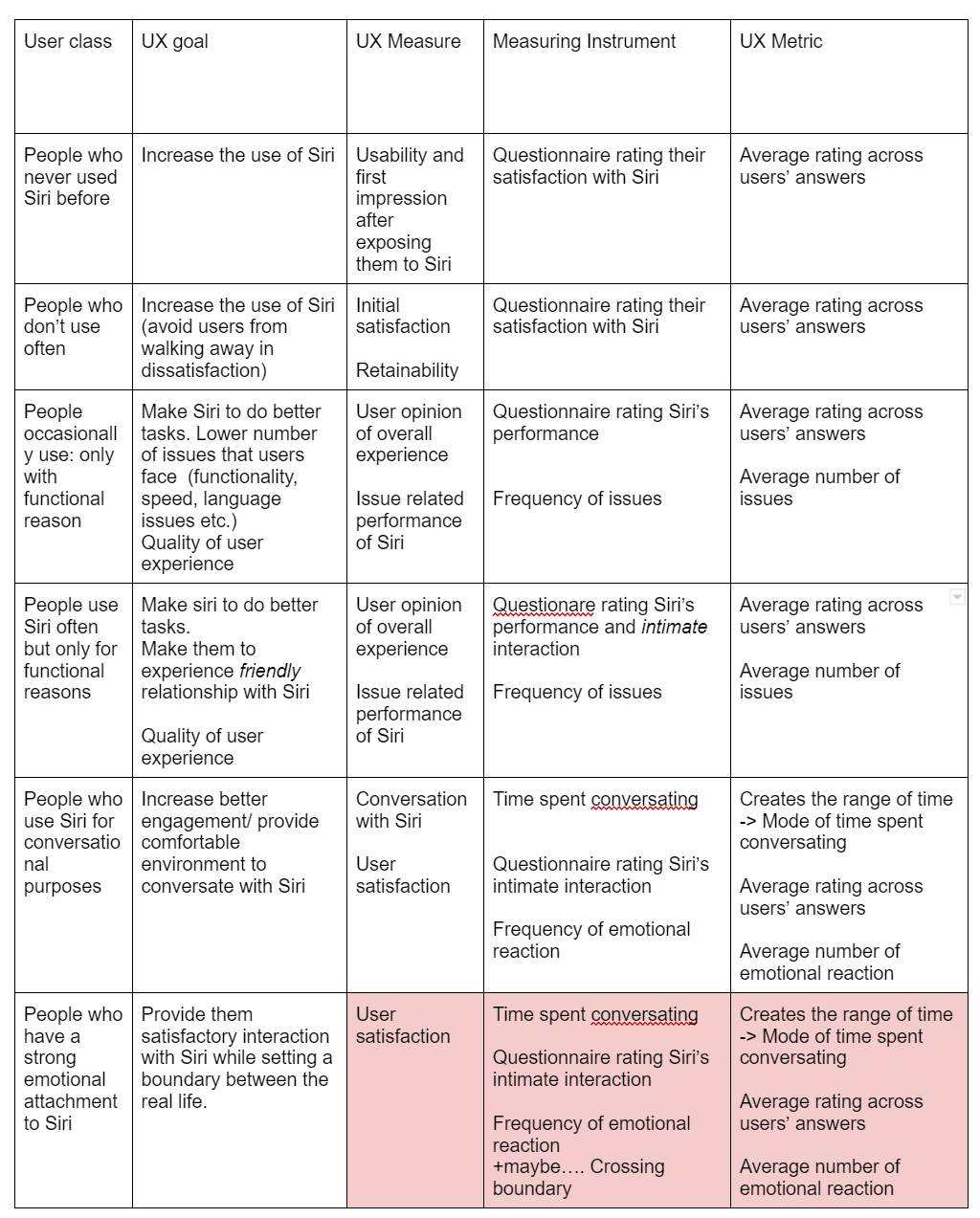
UX Target Table
<Analysis of Survey>
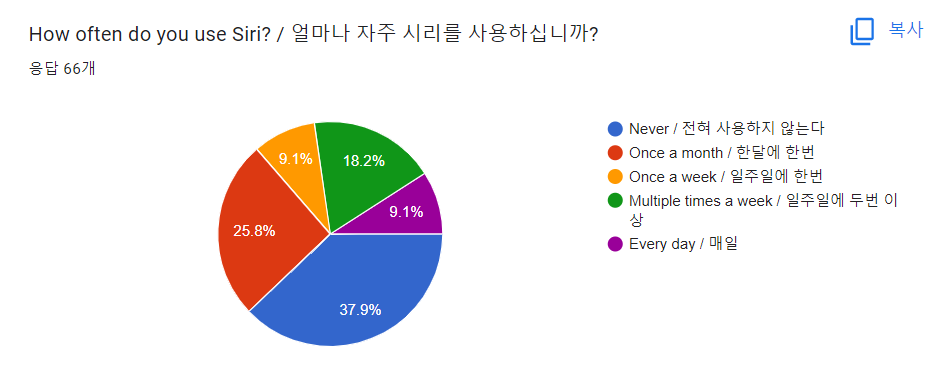
Based on our survey, it is clear that people don’t use Siri a lot. Only 21.3% of respondents answered that they use Siri multiple times a week or every day.
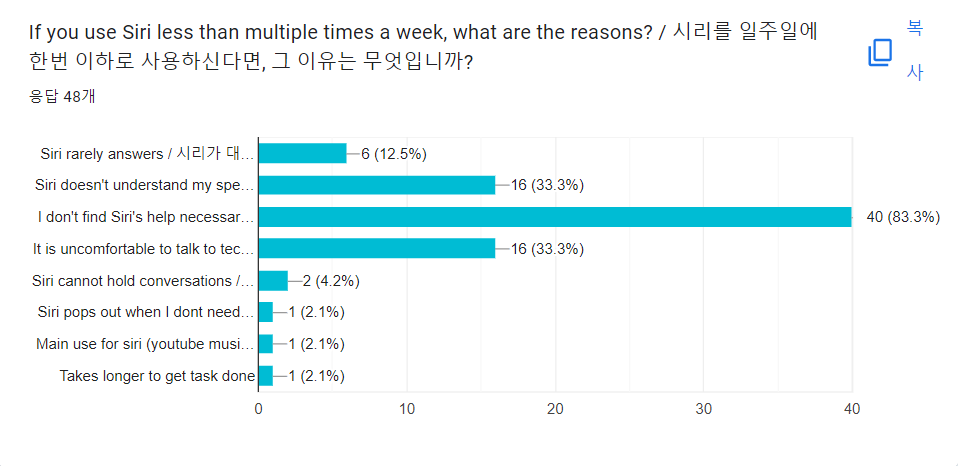
83.3 % of respondents answered that they don’t use Siri often, since they feel that Siri is unnecessary and it is more comfortable to do it themselves. It shows that Siri does not support enough users in the aspect of functionality. Moreover, 33.3% of respondents answered that Siri doesn't understand what users say well and it is uncomfortable to talk to Siri in Public. It shows that users experience obstacles when using Siri: limited function, lack of understanding of users, and uncomforted.

According to our survey, 63.6 % of Siri users use Siri for practical commands like setting alarms or playing music. Searching for information such as asking for definitions of words or a calculator is followed. It also emphasizes that users use Siri as just a voice assistant rather than a two-sided relationship.
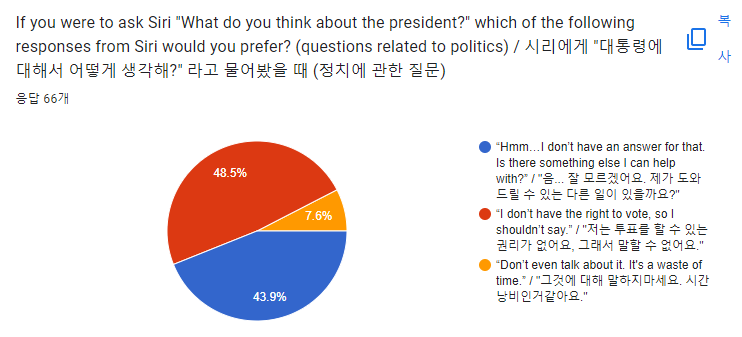
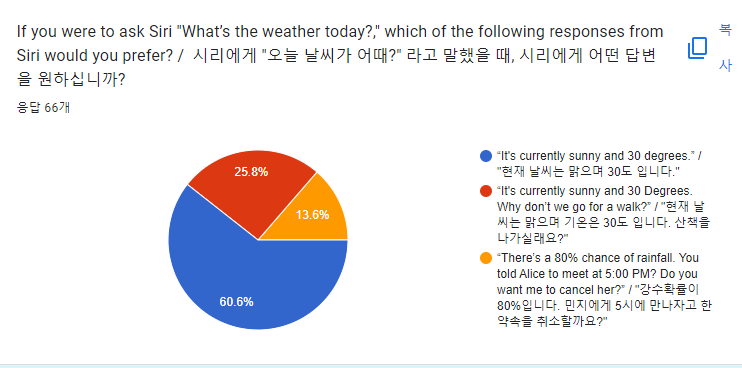
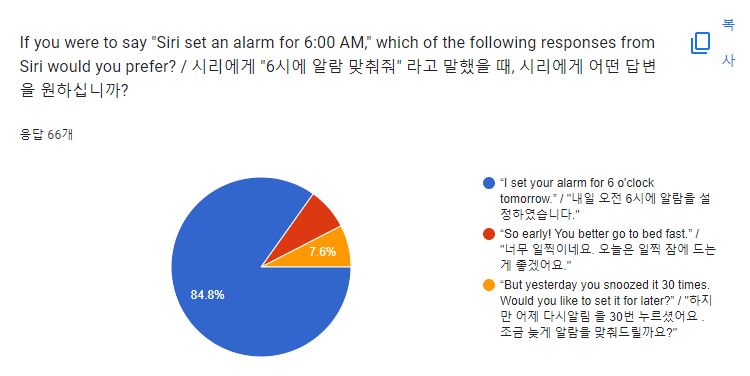
For the questions related to the scenario, we provided three options to the respondents: basic answer (original Siri’s answer), emotional answer, and answer that crosses the line. The yellow colors are all related to sensitive answer which crosses the line in politics, privacy, or human-like such as asking back to the user. It is clear that the portion of yellow in the 4 pie charts are all small than the blue portion. It shows that people are sensitive to crossing the border of Siri, especially with their privacy issues.
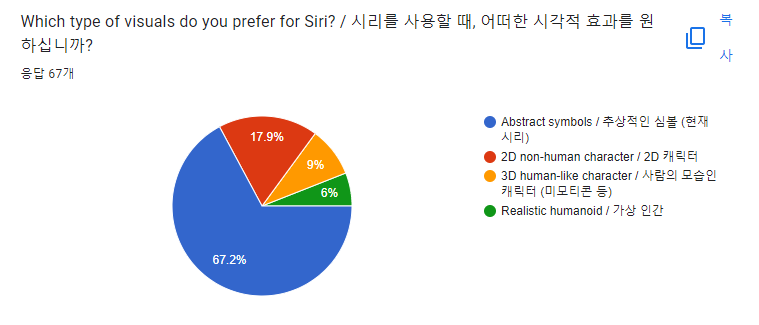
Regarding the visual appearance of Siri, respondents prefer abstract symbols that are current Siri’s appearance rather than having character, facial features, or human-like features.
<Insights from Survey>
Based on our survey, we confirm that people don’t use Siri regardless of their familiarity with Apple devices. Among people who use Siri often, they usually use Siri only for practical purposes and searching for information that computers can do better than humans. Since they use Siri for limited purposes, people do not prefer the human-like features of Siri, especially in the visual aspect. Users just want the developed functionality of Siri, not their voice or visual features. Regarding the context of answers that Siri responds to users, people prefer just simple and informative answers rather than long, emotional, or human-interaction answers.
<Interview Analysis>
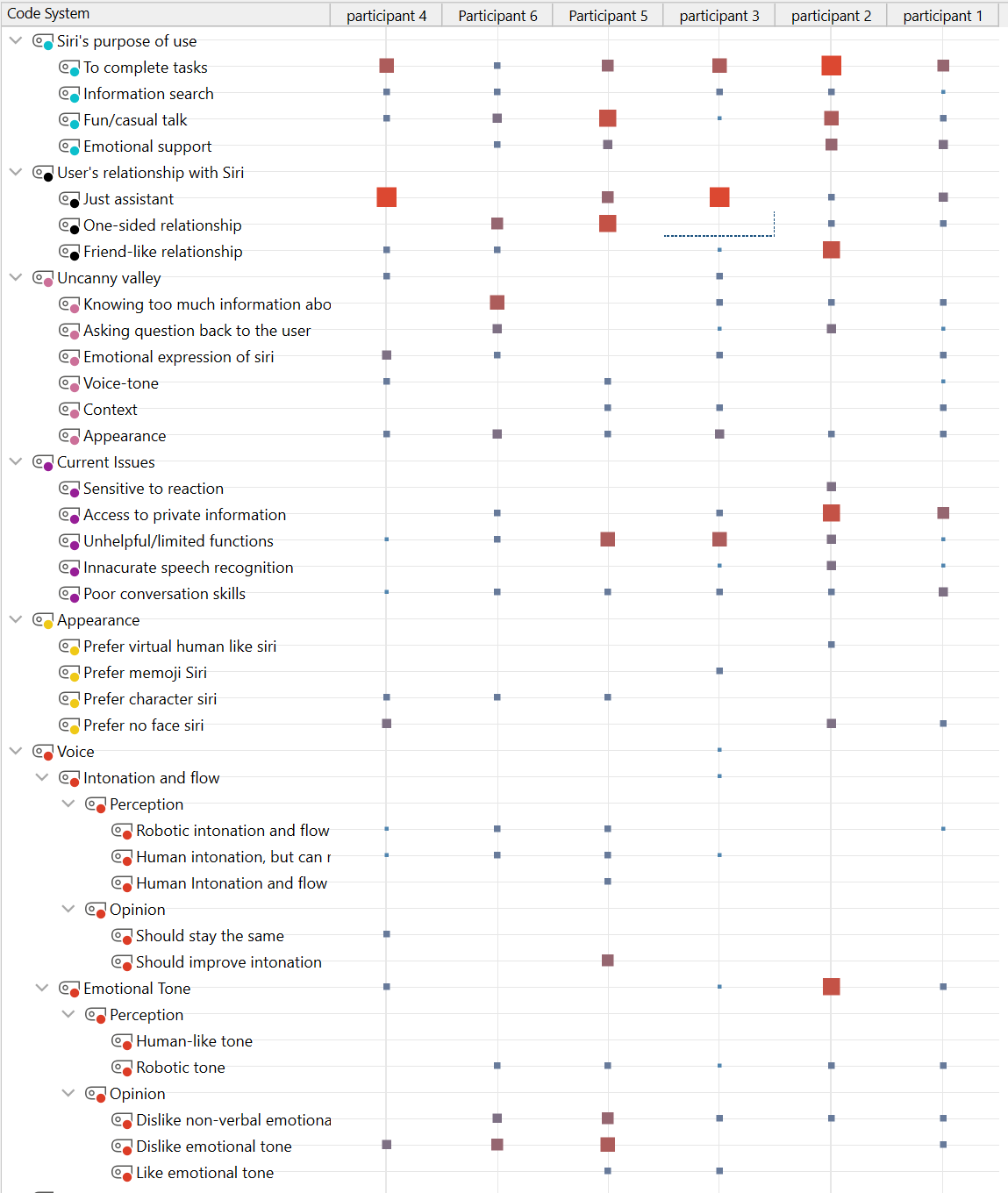
There were a total of 38 mentions of Siri’s purpose being functional such as completing task and looking up information. However, there were also 29 mentions of Siri being used to talk to and even for emotional support. Therefore, while her primary purpose is functional, Siri can also be designed to socialize and interact on a more intimate/friendlier level with users.



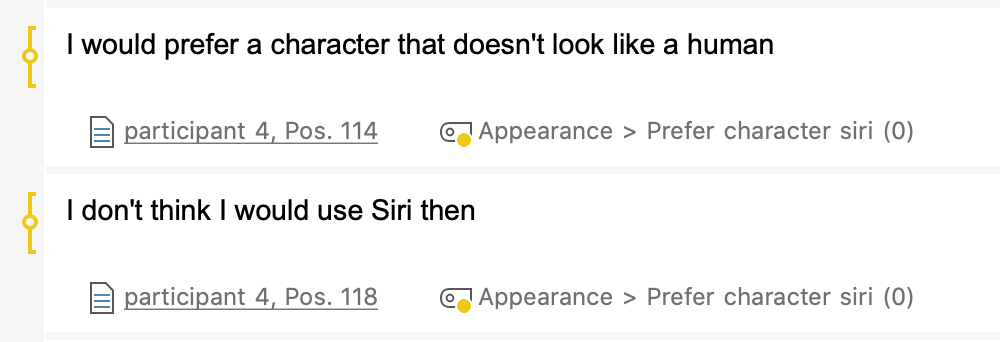
There was clear evidence that users sensed uncanny valley. Especially in regards to the appearance, users are not interested in modifying the current Siri to be more human-like due to uncanny valley.
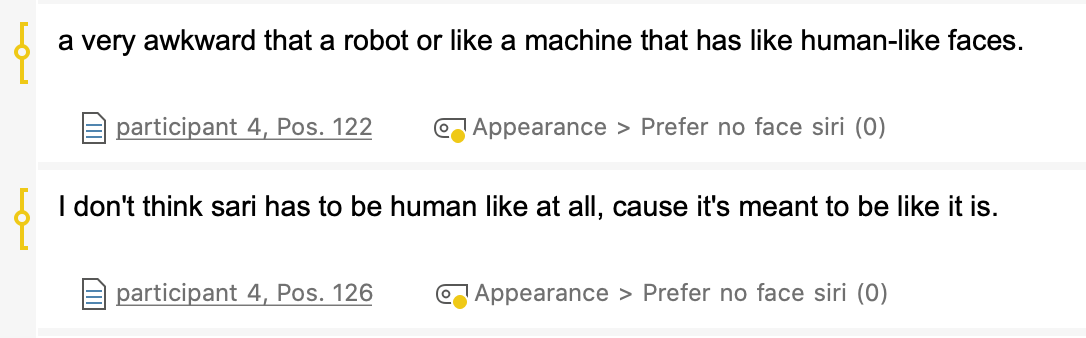
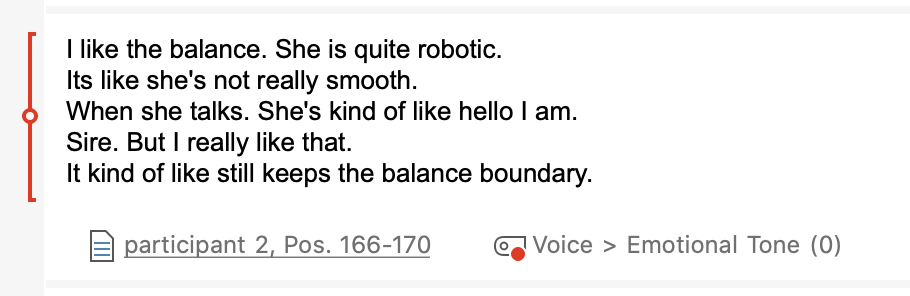
In regards to the voice, users were equally divided as to whether Siri should be improved to sound more human-like. Half of the interviewees perceived her intonation to be robotic and thought it should be improved. The others either deemed it human-like enough or did not express any problems with her robotic speech, and were rather fond of it. As you can see in the participant’s 2 statements, the preference for a robotic voice is rooted in their ability to discern between human and robot (uncanny valley)




For a smoother communication and enjoyable experience, it would be beneficial to improve the intonation of Siri.


However, one aspect of the voice that interviewees felt strongly against improving the emotion conveyed in Siri’s tone. Given Siri is a robot assistant, interviewees said it is inappropriate for her to convey her emotions in her tone or auditory expressions like laughing or crying. Users don’t want to feel burdened by the opinion and emotions of a robot.



Rather than looking or sounding like a human, users showed more interest in interacting with Siri with a more diverse and natural range of answers.


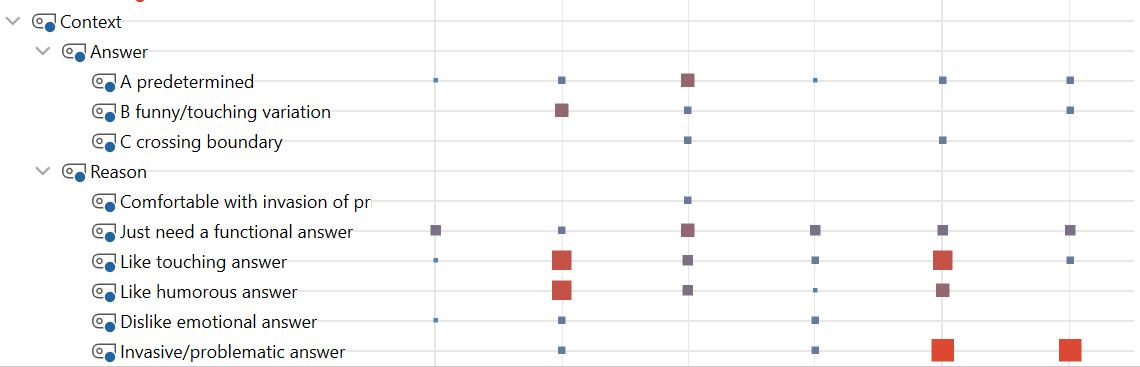
Interviews overall preferred the touching/funny answers over the predetermined answers.

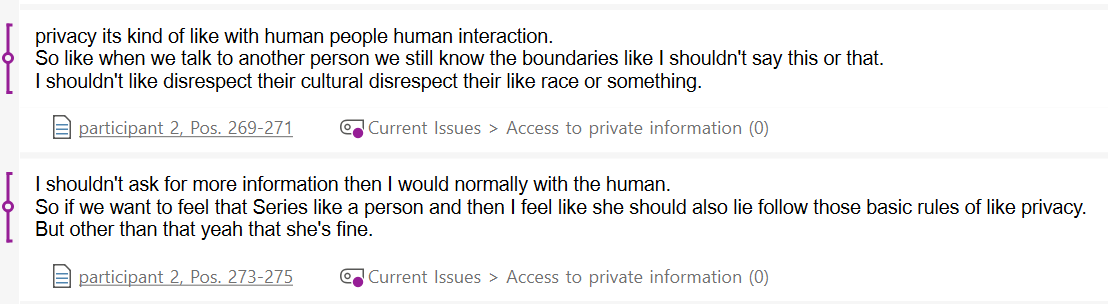
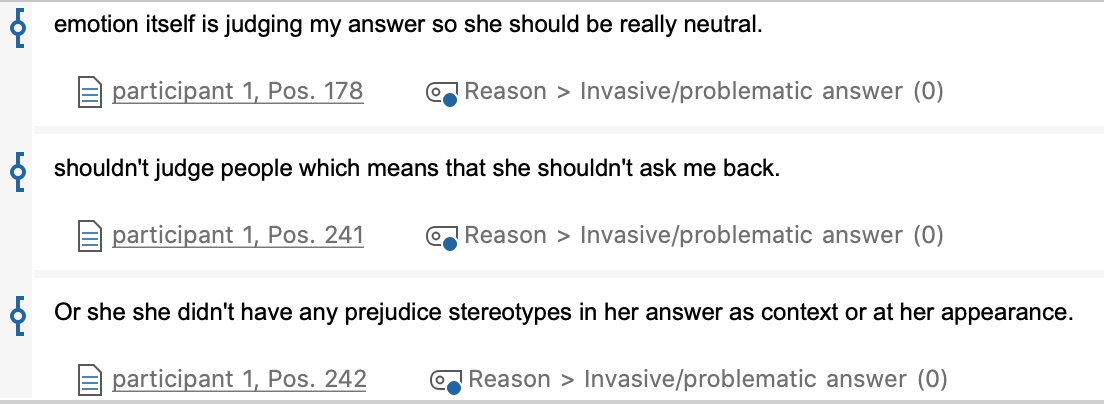
And they set a clear boundary between being touching/funny and being invasive (privacy issues, asking back questions) and controversial (having a stance on ethical/political problems)

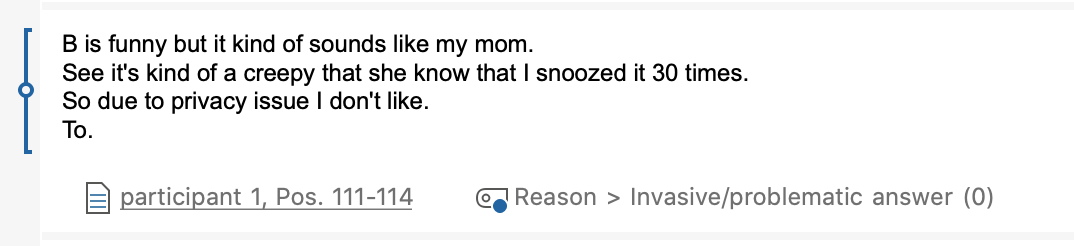

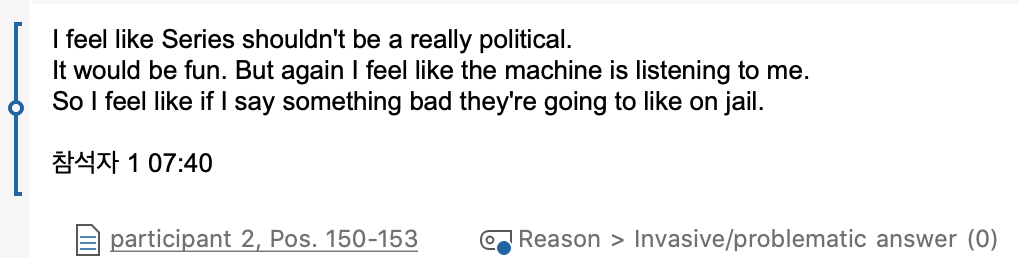
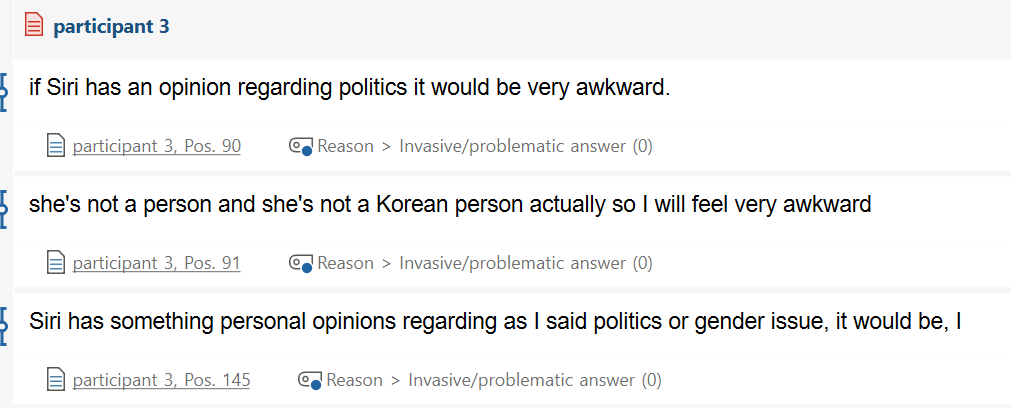
There were conflicting answers regarding 'long conversation' with Siri. Some answered that long conversations are needed for better functionality and even for emotional support. In contrast, Siri remembering former answers and asking for further information than what I gave it is very invasive.

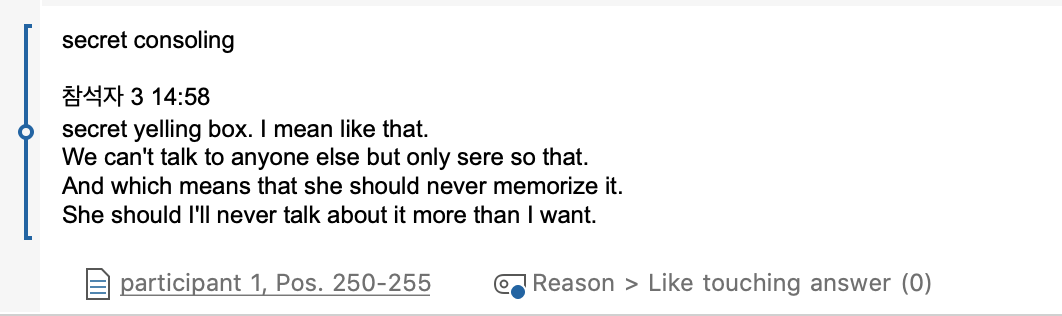
Interesting thing is that users want emotional support from Siri but without having to disclose much personal/private information about themselves (similar to how people don't like to open up much during real life interactions).
Furthermore, the appeal of seeking emotional support from a robot is that you can express your worries without fear of being judged and without burdening their friends.
Voice Assistants & the Uncanny Valley: The More Lifelike, the Less “Real”
The more lifelike, the better, right? Not always.
medium.com
Result
Siri should improve its functionality and sensitivity in understanding the tasks that people ask her to do to increase the use of Siri.
Many people felt a sense of emotional support from Siri's humorous and kind answers. As long as it keeps line not invading one's privacy and ethical/sensitive issues.
With the auditory and visual aspects it should remain as it is or at least draw line with real humans.
People felt uncanny valley when Siri's answer is out of their control.
Prototype Plan
- Using Voiceflow
- Gives option for the user to make control on Siri's answer (ex. Private information that one wants to provide to Siri, Long conversation option, Selecting main purpose of Siri, Sensitiveness)
- Acknowledging the limitation by it self.
-Maintaining current voice and tone of Siri
-Maintaining current appearance of Siri
댓글